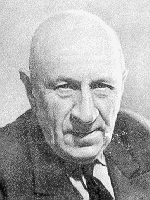
For 56 years he wrote down how he spent his time, through war, hospital stays and long train journeys. He believed many of his results came from this method.
What one life produced
56 yearsof daily time records, with no gap
about 70scholarly works published
12,500typed pages of papers and monographs
13,000flea beetle specimens collected, from 300 species
700+pages written against Lysenko's biology in 1953
1,500pages written in one year, at age 77
1942
During the Second World War, he sent both sons to the front. In 1942, news came that his son Vsevolod had been killed.
He grieved for years. His record did not miss a single day.
How he worked
He did seven to eight focused hours a day. His best single day of scholarly work was 11 hours 30 minutes. He treated every hour as equally valuable, and treated rest as a change of work.
His method
Record. Note the start and end of each activity, within five minutes.
Count. Keep net time only. Every pause comes out.
Review. Sum each month and year. This takes 1 to 2% of the time.
Plan. Set the next period from what really happened.
His five rules
Take on no obligatory tasks.
Accept no urgent work.
When tired, stop and rest at once.
Sleep plenty, about ten hours.
Pair tiring work with pleasant work.
He wrote these for himself, not as rules for others.
A real month, by hand
Every month he added up his hours and what they produced. This is his record for August 1965.
His month, by hand
What he recorded for August 1965.
Real record
Core research59h 45m
Additional work50h 25m
Insect taxonomy20h 55m
Organizing5h 40m
Total main work136h 45m
What it producedFinished a 372-page book on human evolution. Read 8 English books, 530 pages. Wrote 7 planned letters.
Flow
To do something great, protect your focus.
These habits are how he turned ordinary days into a lifetime of deep work.
Make every hour real
“Learn not to be disturbed by what is around you. Three hours of work must be three real hours of work.”Daniil Granin
Flow starts when you stop counting time at the desk and count only focused time.
Match the work to your mind
“Early in the morning, with a clear head, I read serious books.”Lyubishchev
He read philosophy and mathematics first, then history or biology, then fiction when tired.
Guard the deep work
“When writing an important work, all letters except urgent ones wait.”Lyubishchev
Great work needs long, unbroken hours. Everything else can come later.
Keep time to think
“A scientist with no time to think, for one, two or three years, is a scientist without hope.”Lyubishchev
Busy is not the goal. Leave room in every week for slow, hard thought.
Rest by changing work
“Rest is the alternation of two kinds of work.”Daniil Granin
When one kind of work tired him, he moved to another and kept his energy.
Use the small gaps
“On every walk he caught insects. In pointless meetings he worked out math problems.”Daniil Granin
Small pieces of time, used every day, add up across a life.
“He loved time, not as a tool, but as the condition for creating.”Daniil Granin
A life on the record
1890Born in Saint Petersburg.
1916Starts his time log on New Year's Day, at 26.
1937His method reaches its final form.
1942His son Vsevolod is killed in the war. The log continues.
1953Writes more than 700 pages against Lysenko's biology.